Flats and Apartments for Sale in Kochi

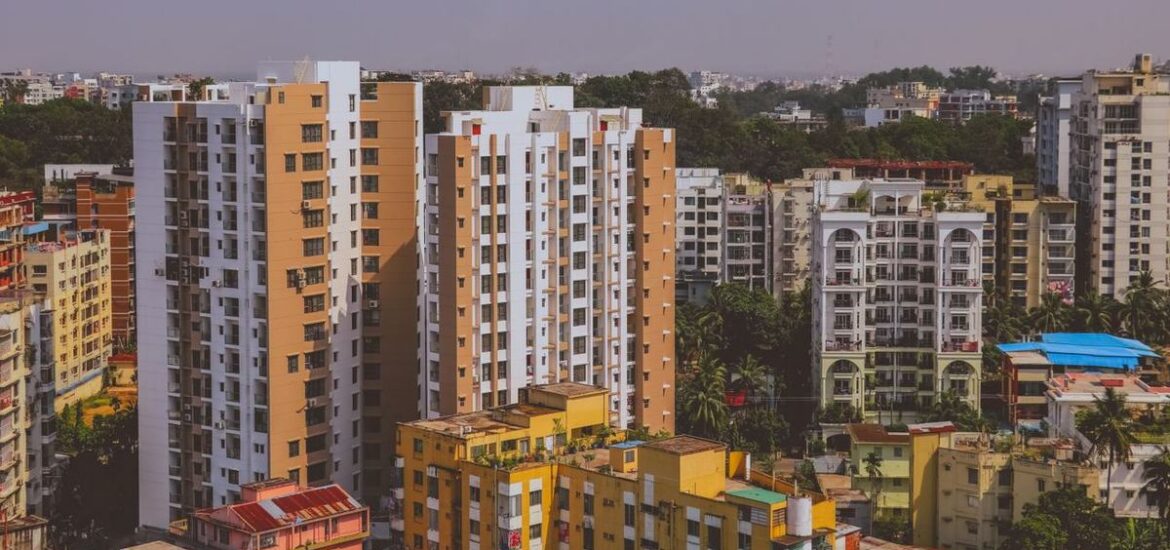
Searching for apartments for sale in Kochi turns into a long list very quickly. The city has active inventory from a large number of developers spread across at least eight distinct residential pockets, and no single builder’s sales office can show you more than its own share of it. This guide maps the Kochi market by locality, explains what actually moves prices between one address and the next, and sets out how a cross builder shortlist is put together for a buyer rather than for a project that needs clearing.
Key Takeaways
-
Kochi splits into roughly four residential belts, and the right one depends far more on your daily commute than on any general ranking of localities.
-
Proximity to the Kochi Metro and to the eastern technology corridor are the two clearest price drivers across the city today.
-
Under construction and ready to move units differ on tax, timing and risk, not only on price, so compare them on total outlay rather than headline rate.
-
Verify every project against its current K-RERA entry and the notified land fair value before booking, whichever developer is selling it.
What Actually Drives Apartment Prices in Kochi
Kochi prices are driven by a small number of variables that repeat across every locality. Commute time to the eastern technology corridor is the first, because that is where the largest concentration of salaried buyers works and where the strongest rental demand sits when an owner eventually lets the flat out.
The second is distance to a Kochi Metro station. The corridor running through the middle of the city changed which addresses count as well connected, and a walkable station is now priced into the rate per square foot in a way that simply did not register a decade ago.
The third is the school and hospital cluster around an address. Families buying a second or third home optimise for this more heavily than first time buyers do, and it explains why some central localities hold value despite offering less new inventory than the outer belts.
The fourth is flood behaviour. Parts of the city sit low, and buyers who lived through the 2018 floods now ask about drainage, plinth level and the behaviour of the surrounding road network during heavy monsoon before they ask about the clubhouse.
The fifth is the developer’s own delivery record. Two towers on the same road can carry meaningfully different prices purely because one builder has handed over on schedule three times and the other has not, and that gap is rational rather than sentimental.
What does not drive price as much as buyers expect is amenity count. A longer amenity list raises the maintenance charge every month for as long as you own the flat, and a swimming pool that nobody in the tower uses is a recurring cost rather than an asset.
Carpet area against super built up area is the last variable and the one most often glossed over. Two flats advertised at the same total price can differ by a meaningful share of usable floor once the loading factor is compared honestly, so ask for the carpet figure in writing on every candidate.
Area by Area: Where Kochi Inventory Actually Sits
Kochi is easier to understand as four belts than as a list of neighbourhoods. Each belt has a distinct buyer profile, a distinct price behaviour and a distinct set of active developers, and most buyers who feel overwhelmed by the market are really choosing between belts without having named them.
The eastern belt is employment led. The central belt is convenience led. The northern belt is connectivity and value led. The southern and waterfront pockets are premium led. Almost every serious Kochi search resolves into one of those four once the daily commute is put on the table.
The practical method is to fix the commute first and let the belt follow, rather than starting from a locality name someone recommended. A twenty minute difference each way is roughly two working weeks a year, which is a larger lifestyle variable than most of the features buyers compare instead.
Within each belt the difference between two projects a kilometre apart is usually smaller than the difference between belts. That is why a shortlist that spans three belts is often a sign that the brief has not been narrowed enough rather than a sign of thorough searching.
Inventory depth also differs sharply by belt. The eastern and northern belts carry the most active launches at any moment, while the prime central pockets turn over a small number of units and often resell rather than launch, which changes how long a search realistically takes.
The four subsections below summarise each belt. Detailed locality guides for each pocket sit under this page, and the current project listing shows which of them BrickNova is actively working with at any given time.
East: Kakkanad, Infopark and the Technology Corridor
The eastern belt is Kochi’s largest source of new residential demand, anchored by Infopark and the adjacent SmartCity campus. Buyers here are predominantly salaried technology and services employees optimising for a short commute, which also makes it the most reliable rental market in the city. Inventory is deep, launches are frequent, and the trade off is traffic congestion on the arterial approaches during peak hours.
Central: Edappally, Kaloor, Palarivattom and Vytilla
The central belt trades new construction for convenience. Schools, hospitals, retail and the metro line are all within short reach, and the road network connects outward in every direction. Plot sizes are tighter so towers tend to be vertical rather than sprawling, and amenity space is more constrained than in the eastern belt. This is where second time buyers and families with school going children concentrate.
North: Aluva, Kalamassery and the Airport Corridor
The northern belt offers the clearest value proposition in the city, helped by metro connectivity at one end and Cochin International Airport at the other. Buyers who travel frequently, and non resident families who need an easy airport run, weight this belt heavily. Prices per square foot are generally the most accessible of the four belts for comparable specification.
South and Waterfront: Panampilly Nagar, Thevara and Marine Drive
The premium pockets sit here. Panampilly Nagar remains the most established prime address in the city, and the waterfront strip carries the highest rates for genuine river or backwater frontage. Inventory is thin and much of it changes hands as resale rather than launch, so a search in this belt is a waiting exercise rather than a browsing one.
Matching a Budget to a Belt Without Guessing
Published rate per square foot figures for Kochi vary widely between sources and go stale within a quarter, so this guide deliberately does not quote them. The reliable method is to establish the notified fair value for the specific survey number and then compare live quotes from several developers in the same belt against it.
Fair value is published by the state and is the floor used to compute stamp duty. The Kerala registration department publishes it by village and survey number, and checking it takes minutes. A quoted price far above fair value is not automatically wrong, but it should have a reason you can articulate.
The second calibration point is what comparable units in the same tower or the immediately neighbouring tower have actually registered at recently. Registered values are a matter of public record, and they are a firmer reference than any advertised price list, which is a starting position rather than a clearing price.
The third is loan eligibility, which quietly sets the real ceiling for most buyers. Lenders assess income, existing obligations and the property valuation independently, and a sanction that arrives lower than expected late in the process is one of the most common reasons a booking falls through in Kochi.
Working the sequence in that order, fair value then comparable registrations then sanctioned loan amount, produces a budget you can actually transact at. Working it in the reverse order, starting from an advertised price, produces a budget that shifts every time a sales executive mentions a new scheme.
BrickNova’s home buying service runs this calibration before any project is shown, and the mortgage service handles the lender comparison in parallel so that the sanction is not the last thing to be discovered.
Under Construction Against Ready to Move
This choice changes more than the price. It changes the tax you pay, the risk you carry, the finance structure available to you and the date you can actually move in, and buyers routinely compare the two on rate per square foot alone as though everything else were equal.
Goods and Services Tax applies to an under construction unit but not to a completed one that already holds an occupancy certificate. That difference alone can outweigh a meaningful discount on the headline rate, so the comparison has to be run on total outlay rather than on the quoted price.
Timing risk is the second variable. An under construction purchase converts into a home on a date that is a forecast, not a fact. The K-RERA entry states a completion date and the developer’s own history on earlier projects tells you how seriously to take it.
Payment structure is the third. Under construction purchases are usually construction linked, which spreads the outflow but leaves a buyer paying loan interest and rent simultaneously for the whole build period. A ready unit demands the full amount at once but ends the double payment immediately.
Ready to move removes almost all of that uncertainty and prices accordingly. What you gain is certainty about what you are buying, because you can stand in the actual flat, at the actual floor, and see the actual view rather than a rendering of it.
There is no universally correct answer. First time buyers still paying rent usually value certainty more than they expect to, while buyers with a long horizon and no rent to service can afford to take construction risk in exchange for the earlier entry price.
A middle option exists and is often overlooked. Projects nearing completion, where the structure is finished and the occupancy certificate is a few months away, carry much of the pricing advantage of an under construction unit with a far shorter and more predictable wait before handover.
How a Cross Builder Shortlist Gets Built
A shortlist is only useful if the set it was drawn from was wide. Starting from one developer’s inventory and calling the result a shortlist is a category error, and it is the single biggest structural difference between an independent advisory and a builder’s own sales desk.
The process starts with the brief rather than the inventory: budget band, belt, carpet area, family size, possession date and loan headroom. Only then are active projects across every developer in that band pulled together, including channel partner inventory that is never advertised publicly at all.
Verification comes before presentation. Title deed and encumbrance certificate, the current K-RERA registration entry, approved plans from the local body, the developer’s delivery record on earlier projects and the full payment schedule are checked on each candidate before it reaches a buyer.
Anything failing those checks is removed and the reason is stated. Buyers routinely find the exclusion list more informative than the shortlist, because it shows what the filter is actually doing rather than asking them to trust that a filter existed.
What arrives is three to five projects with the reasoning attached. Our post on how Kochi buyers are matched to verified flats walks through the mechanics in more detail, and the guide to guided site visits in Kakkanad shows how the visit programme is then sequenced.
The visits themselves are arranged so that comparable projects are seen on the same day. Spreading four site visits across three weekends guarantees that the first flat has faded from memory by the time the fourth is seen, which is how buyers end up choosing the most recent option rather than the best one.
Costs Beyond the Quoted Price
The quoted rate per square foot is rarely what a Kochi flat costs. Floor rise charges, preferred location charges, covered parking, club membership, power backup capacity, corpus fund and maintenance advance are all charged separately by most developers and are all negotiable to different degrees.
Stamp duty and registration are payable to the state on top of that and are calculated against the higher of the transaction value and the notified fair value. These are not negotiable and should be budgeted from the start rather than discovered in the final fortnight before registration.
Where the project is under construction, tax applies to the construction component and changes the arithmetic further. Where it is complete and holds an occupancy certificate, it does not. Two projects quoting the same rate can therefore land at materially different total outlays.
Home loan costs form the third block: processing fee, legal and technical valuation, documentation charges and the spread the lender applies over its external benchmark. The spread in particular varies more between lenders than most buyers realise and is worth comparing across at least three.
Interiors are the block buyers underestimate most consistently. A flat handed over in standard specification still needs wardrobes, kitchen fit out, light fittings and often flooring upgrades, and that spend arrives immediately after the largest outflow of the entire process.
Adding all of these to one page before shortlisting rather than after booking is the difference between a budget that holds and a budget that quietly moves. Our consulting service does this at the start of an engagement for exactly that reason.
Verification: What to Check on Every Kochi Project
Every project carries a K-RERA registration entry, and that entry is public. It states the promoter, the approved plan, the declared completion date and the current status of the project. Reading it takes a few minutes and it is the single most useful document a Kochi buyer can look at.
The title deed and a current encumbrance certificate come next. The encumbrance certificate shows whether the land carries any charge, mortgage or dispute, and it is a matter of record rather than something a buyer needs to take on trust from the seller’s side of the table.
Approved building plans from the local body should match what is actually being constructed. Deviations between the sanctioned plan and the built structure are a known source of trouble at occupancy certificate stage, and they surface long after the booking amount has been paid.
For a completed project, the occupancy certificate is not optional. A flat without one can be physically finished and still be legally incomplete, which affects resale, loan eligibility and utility connections in ways that are painful to unwind afterwards.
The developer’s earlier projects are the last check and the most predictive. Look at what the same promoter delivered three years ago, when it was promised, and what the buyers in that tower say now. Delivery history is the best available proxy for delivery risk.
Our guide on how to compare firms in Kerala covers how to assess a developer or a brokerage on record rather than on presentation, and the piece on finding a property dealer near you covers the same question at individual level.
Mistakes Kochi Flat Buyers Make Repeatedly
The first is searching by project name instead of by belt. A buyer who starts from two project names seen on a hoarding has already narrowed the market to whatever two developers spent the most on advertising that quarter, which correlates with nothing a buyer should care about.
The second is visiting the show flat and pricing the show flat. Show units are finished to a specification that is not what gets handed over, and the gap between the two is usually a large interiors bill that nobody mentioned during the visit.
The third is ignoring the monthly maintenance charge. A tower with an expansive amenity deck costs more to run every month for as long as the flat is owned, and over a ten year hold that recurring number can exceed the discount that won the buyer over at booking.
The fourth is treating the builder’s sales team as an advisor. They are usually knowledgeable and often genuinely helpful about their own product, but they cannot tell you that the project two kilometres away is a better fit, because they are not paid to know.
The fifth is skipping the flood and drainage question. It is uncomfortable to raise and easy to postpone, but it is far cheaper to ask before booking than to learn during the first heavy monsoon after moving in. Neighbours in the surrounding buildings answer it honestly.
The sixth is rushing the loan. Sanction terms differ between lenders on more than the headline rate, and a buyer who accepts the developer’s preferred lender without comparing at least two others is usually paying for that convenience over the full tenure of the loan.
The seventh is not reading the builder buyer agreement. It sets out the penalty for delayed possession, the conditions under which the developer can change the plan, and what happens to your money if the project stalls, and it is signed by most buyers without a line by line reading.
Conclusion
Finding the right apartments for sale in Kochi is a filtering problem, not a searching problem. Fix the belt by commute, calibrate the budget against notified fair value and comparable registrations, compare under construction and ready units on total outlay, and verify the K-RERA entry, title and approved plans on every candidate before booking. BrickNova works across developers rather than for one, which is what makes a genuinely cross market shortlist possible. Request a personalised Kochi shortlist of three to five verified projects.